Digital Transformation
Self-service relocation platform
Project Overview
The Dwellworks Portal provides tailored, localized, and personal relocation insights across over 100 metros and 20 countries. The primary challenge was transforming a high-touch, in-person orientation service into a scalable, high-quality digital experience that still seamlessly incorporated expert guidance.
Team
Partnered with internal product management, SME’s and development teams
Categories
UX & Product Design
Content Strategy
Information Architecture
Brand Development
MVP

The Challenge: Fragmented & Manual Relocation
The existing relocation process relied heavily on manual data entry and complex, in-person consultations, creating significant friction for both customers and consultants.
Customer Friction: Relocation customers faced redundant workflows and difficulty consuming large, poorly structured content, forcing them toward less personalized “DIY” platforms.
Consultant Overhead: Destination Consultants were moving a highly hands-on service to a digital format, creating resistance and workflow fragmentation. The digital system needed to improve efficiency without losing the crucial personal touch.
Information Architecture (IA): The existing IA did not properly group information, leading to high cognitive load and difficulties in scaling content globally.
Objectives
Our mission was to deliver an effective Minimum Viable Product (MVP) that achieved three key goals:
Digital Transformation: Transform the in-person orientation into a comprehensive, self-guided digital journey.
Efficiency and Usability: Significantly improve ease of use and efficiency for both the relocation customers and the destination consultants.
Progressive Experience: Structure the platform to walk the user through each phase of relocation sequentially, ensuring a guided and manageable process.



Process & Key Insights
Research and Discovery
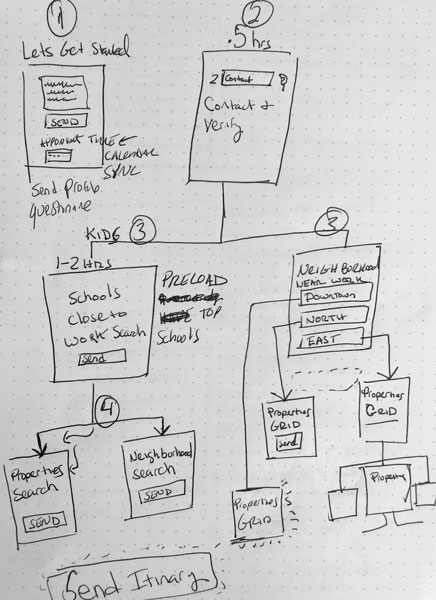
We employed a mixed-methods approach, utilizing Journey Mapping, Persona development, and deep SME Collaboration to define the needs of our two distinct user groups:
-
Relocation Customers: Insights confirmed that fragmented workflows and poor IA were the primary friction points that the digital solution needed to alleviate.
-
Destination Consultants: Engaging this group was critical. We learned that the ability to easily inject their personal, local expertise was non-negotiable for service quality.
User Insights
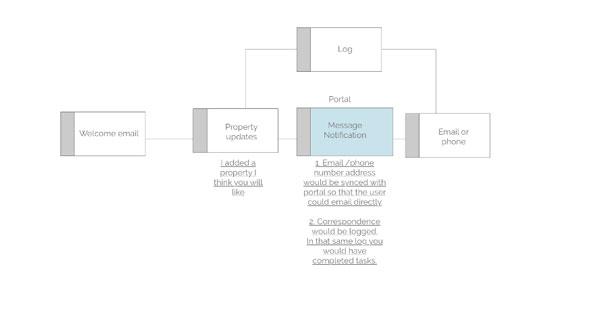
There were redundancies and fragmented workflows when entering information and communicating with clients. The Information architecture did not properly group like information. Frequently, the content was not broken up in a way that was easy to consume. From this insight, we could both leverage existing content and add additional content in a more structured and streamlined manner.
Solution Design & Information Architecture
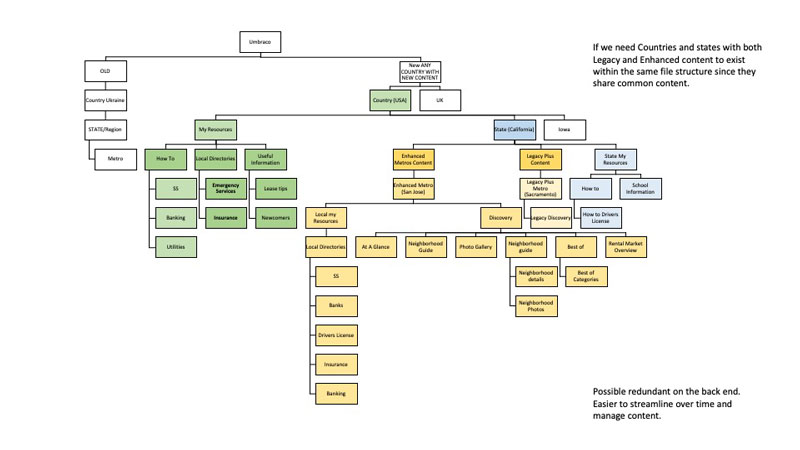
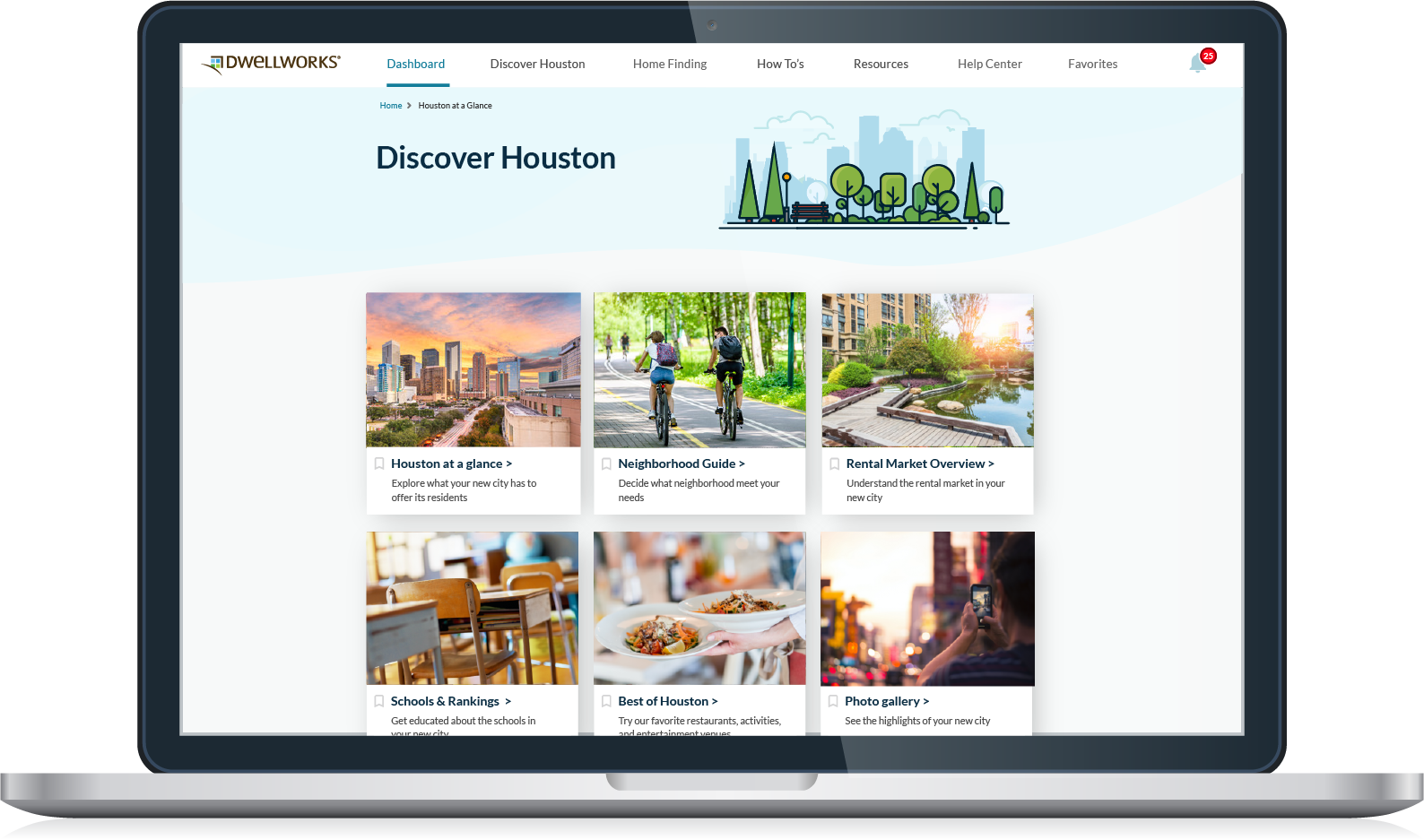
The project focused on a robust Information Architecture built on a Site Map and Content Framework to support global scaling and a fluid user experience.
|
Feature |
Design Focus |
Impact |
|---|---|---|
|
Self-Guided Dashboard |
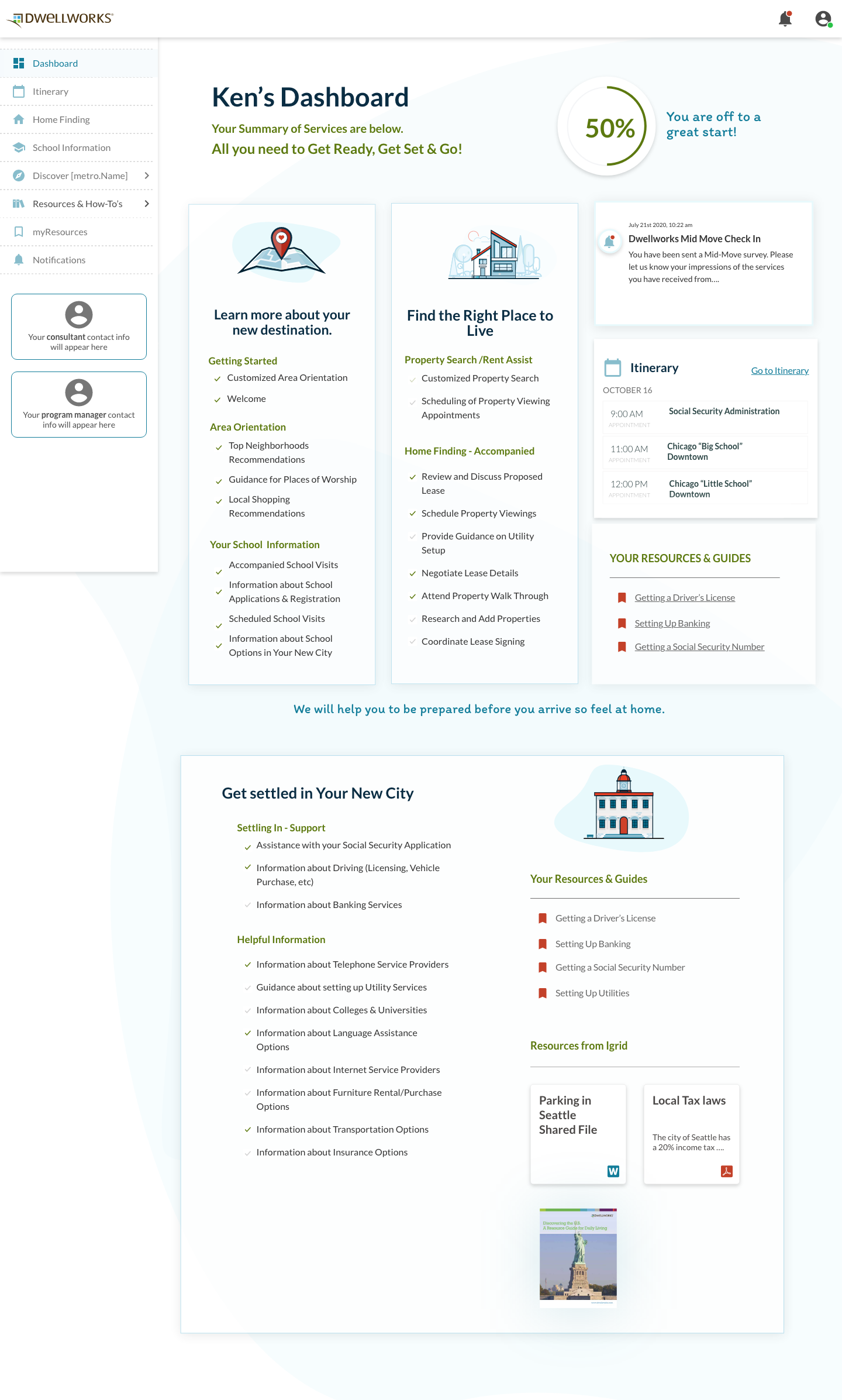
Created an intuitive, educational dashboard that helped clients orient themselves and see their progress through the complex relocation journey. |
Reduced reliance on consultants for basic status updates and improved customer clarity. |
|
Personalized Hybrid Interface |
The portal was designed as a dual-function system: customers view curated information, and consultants can easily add private comments and recommendations. |
Maintained a crucial human element within the digital process, increasing customer confidence. |
|
Mobile-First Wayfinding |
Analytics showed users perform research on desktop, but wayfinding and quick reference features were prioritized for a mobile-first experience. |
Optimized quick task completion for users on the go. |
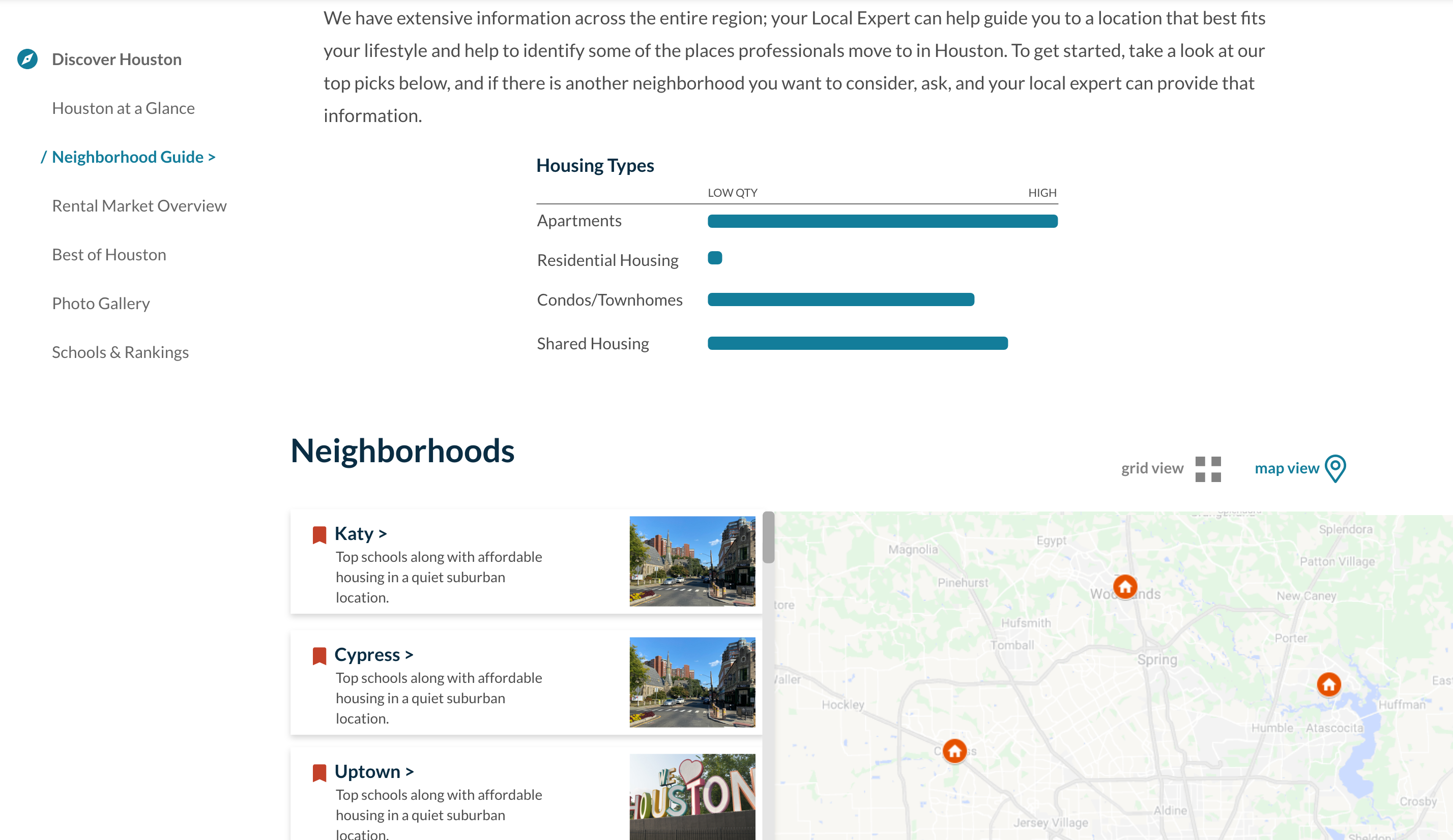
|
Key Neighborhood Comparison |
Combined vital, ground-level indicators (walkability, accurate commute times, local maps) that are difficult to find on generic DIY platforms. |
Empowered customers to make informed, data-driven decisions when comparing neighborhoods. |
Product features
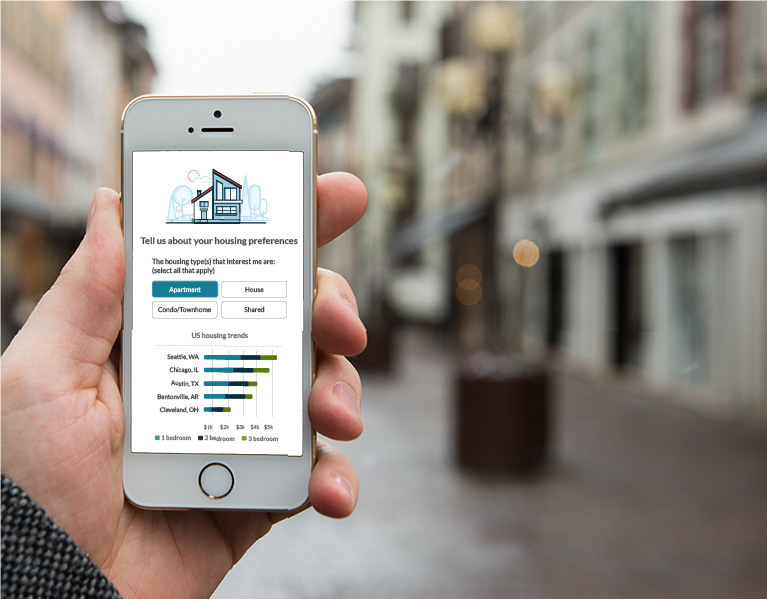
Mobile Wayfinding
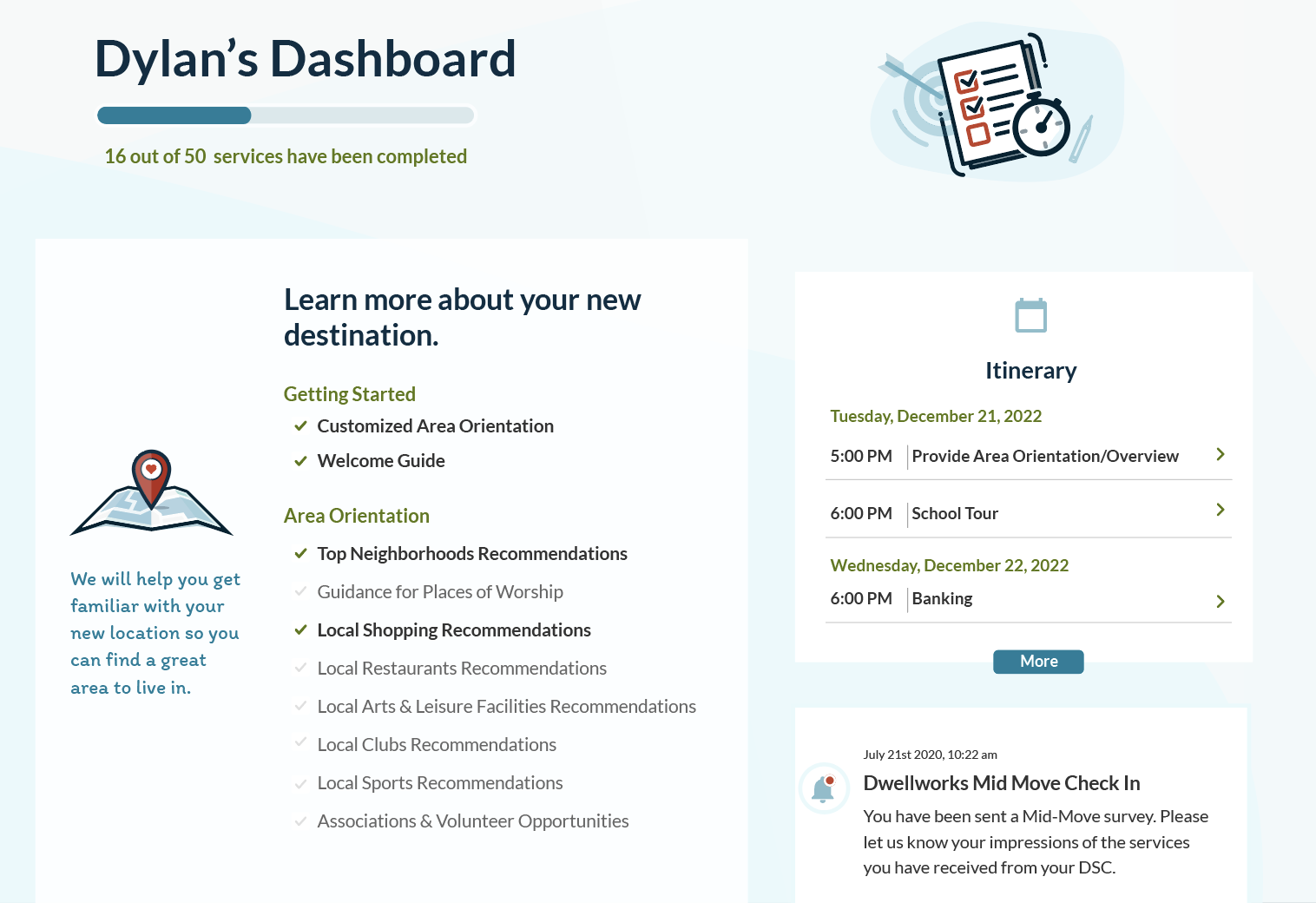
Self-guided dashboard
Personalized-Hybrid Interface
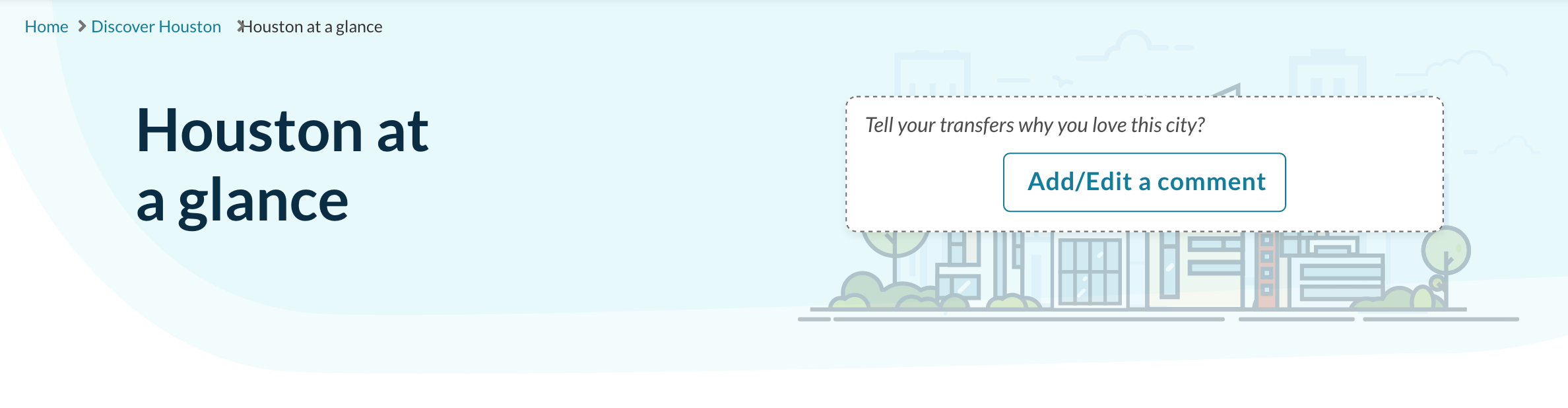
The portal was designed as a dual-function system: customers view curated information, and consultants can easily add private comments and recommendations.
Check out the add a comment prototype.
Client view
Personalized comments are posted in key locations on the site, directly from local consultants assigned to their case.
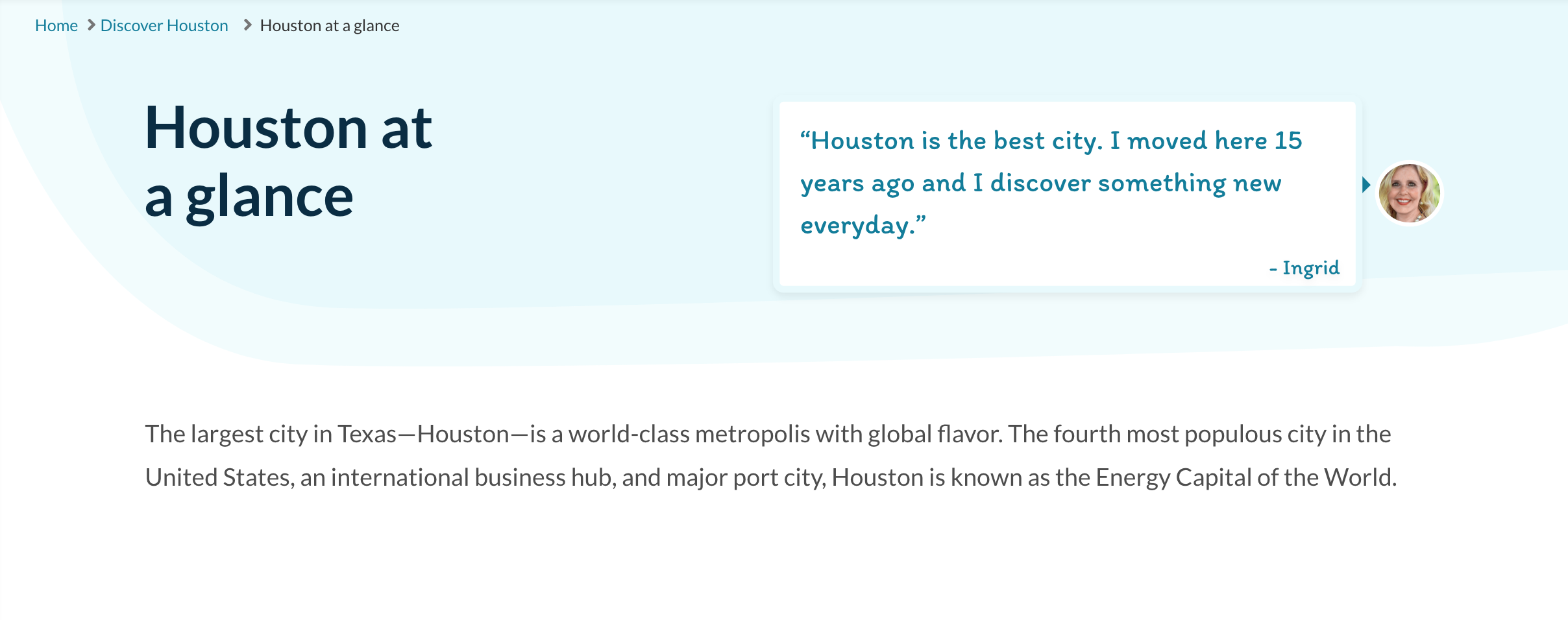
Message Mapping
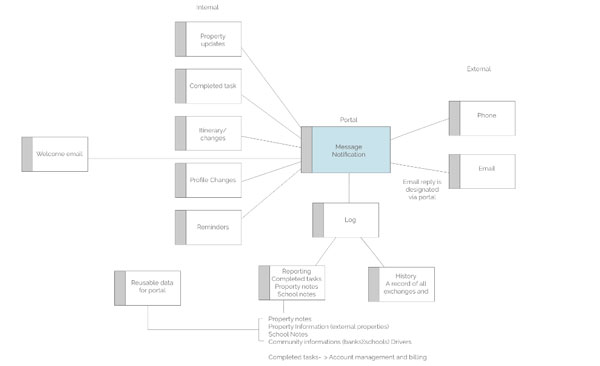
Strong Supportive Content
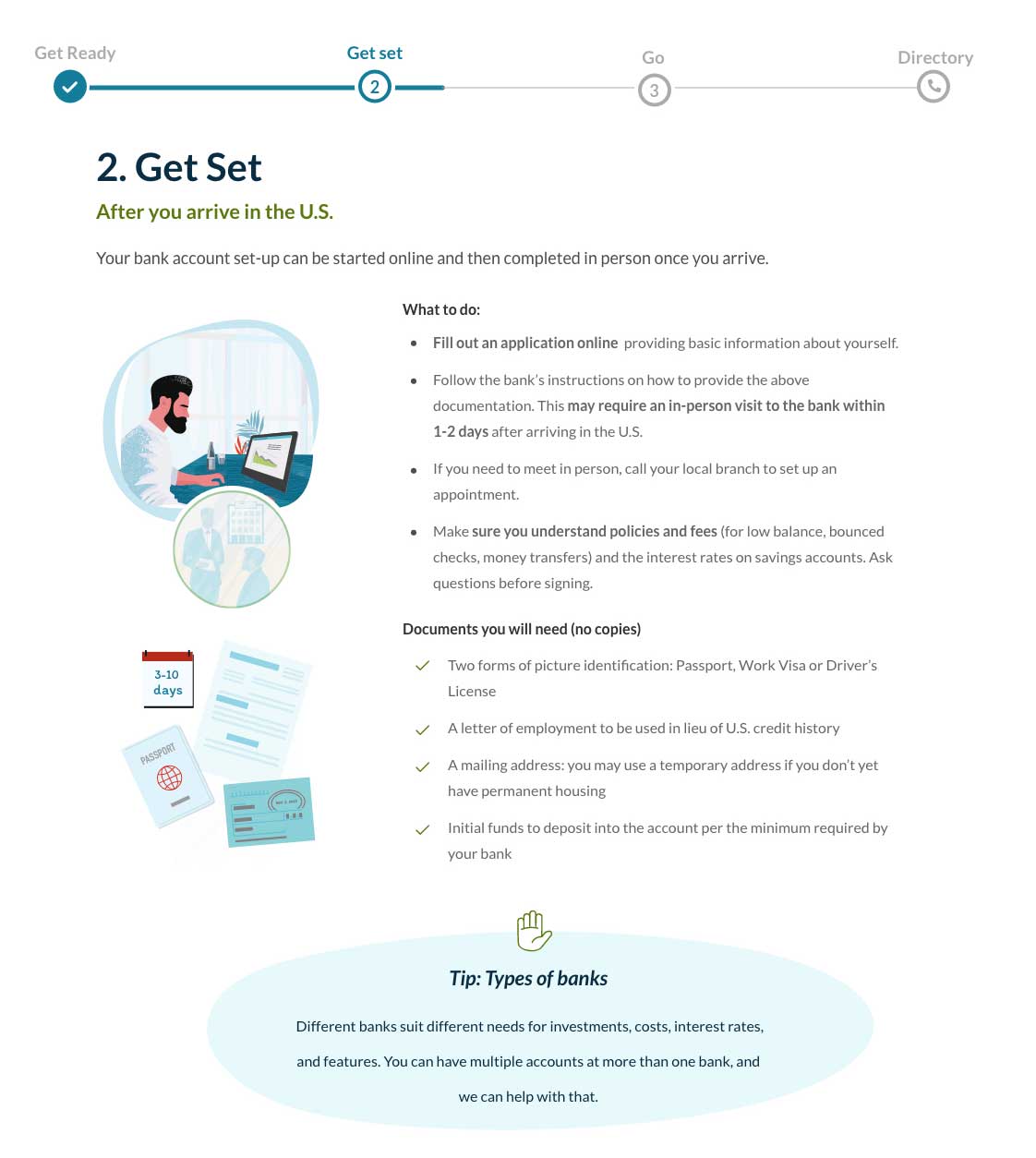
Step by Step Instructions
Personalized / Hybrid content
Consultant View
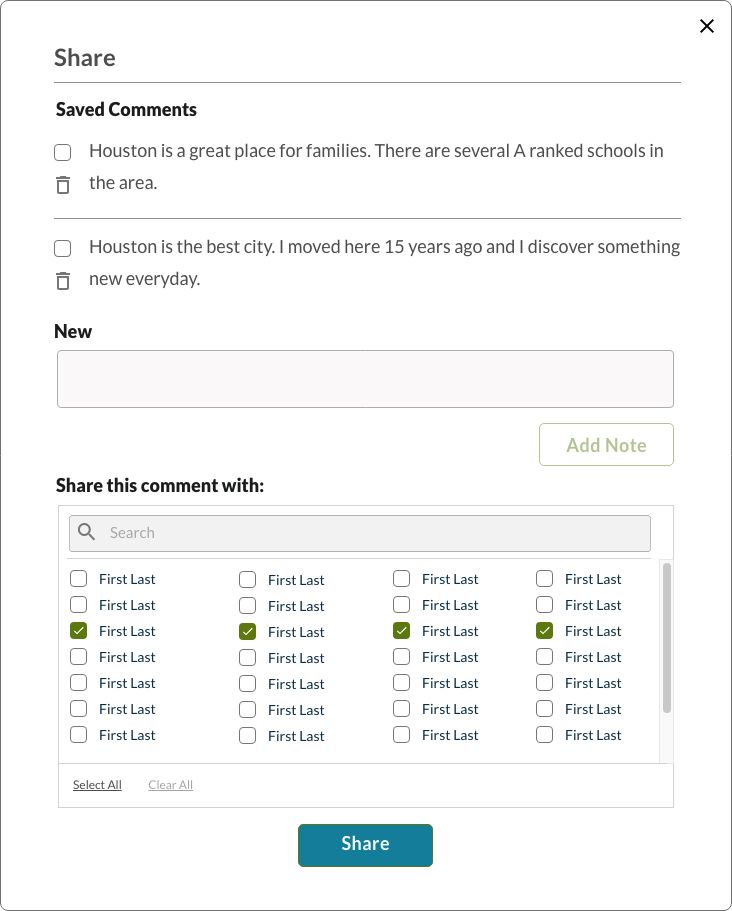
Consultants could quickly add personalized details about the destination.
Consultant bulk message center
Young professionals and parents have different needs when relocating. Consultants can make personalized comments targeted at specific client groups.
Strategic Content Design
Scalability (IA & Content)
Content was critical to the success of the product and the need to accommodate over 100 global metros. The timeframe was less than six months, which created logistical and technical challenges. In my role, I advised a way to scale the platform’s requiring heavy planning within the CMS, and the process for gathering the information.
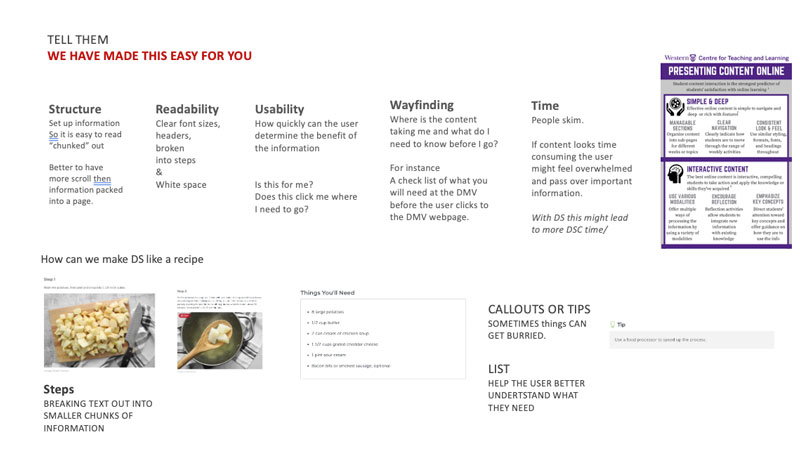
- Structured Content Framework: I developed a structured content model, aligning information architecture with content design objectives.
- This model was deployed to the Subject Matter Experts (SMEs) in the field, who could easily fill in, creating buckets of content that the content manager could prepare for the editor.
- Editorial Workflow: An editor refined and standardized the global content for consistency. We leveraged
- eLearning strategies I provided examples of common content models to educate the content manager, who was an SME, who was promoted to the role. This helped the team understand how to break up complex information into step-by-step instructions, easing the consumption of crucial details across diverse global locations.
Impact (MVP)
The MVP successfully digitized the process, achieving a Scalable, robust CMS-driven architecture while integrating high-touch, localized expertise, ultimately improving usability and efficiency for both user groups.
Visual Design & Inclusivity
Given the international customer base, inclusivity was a core constraint:
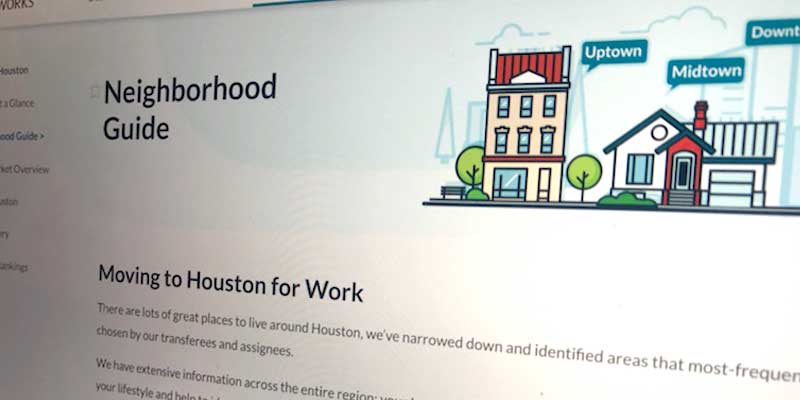
- Imagery: We intentionally chose a combination of stock and hand-drawn illustrations over photos of people. This allowed the diverse user base to more easily place themselves into the experience without relying on specific demographic representation.
- Accessibility: The design palette was tested to match WCAG AA guidelines for contrast and readability.
Results
The new dashboard meets the opportunity in the market. This initiative was a key expansion in the Dwellworks portfolio and provided a broader service offering to relocation service providers.
YOY Increased
Cost Savings
Labor Reduction
6 Months to
launch MVP
Check out this prototype.
Project Notebook