
Building Design Ecosystems
Helping UX teams deliver across multiple projects _ From design system to product experience
Project Leadership
Transforming eight legacy systems into a single ordering experience for pharmacists — while building the team structure, design system, and cross-squad processes to sustain it.
Outcomes
+2% revenue lift at MVP
94% add to cart
68% satisfaction increase
Leadership Philosophy: Empowerment-Driven Governance
Effective design leadership isn't about gatekeeping—it's about building the framework that lets teams move fast without compromising the user experience. In high-velocity environments, true governance means creating the alignment and trust that enable designers to make autonomous, high-quality decisions directly within their product squads.
Core Belief: Design governance shouldn't restrict velocity—it should accelerate thinking by giving designers the structural guardrails to operate with confidence.
Key Pillars
- Structure Over Policing Governance is often misunderstood as top-down control. Instead, leadership should establish clear decision-making frameworks. When designers understand the principles, boundaries, and strategic goals, they don't need permission to execute—they have the clarity to lead.
- Squad-Level Stewardship Centralized oversight stalls momentum. By decentralizing ownership, designers become true stewards of the user experience within their cross-functional squads — close to the code, the metrics, and the user problems that matter.
- Documentation as Infrastructure: Managing thousands of screens across multiple product lines is impossible without a shared source of truth. Robust documentation, aligned design systems, and documented UX patterns are the connective tissue that prevents fragmentation.
- An Ecosystem That Accelerates Thinking. A healthy, well-documented design ecosystem dramatically reduces cognitive load. Teams stop debating basic components and baseline interactions—freeing up brainpower for complex problems and strategic innovation.

System Architecture: UI/UX Guidelines & AEM Integration
The Complexity: Supporting 7 fast-paced squads managing 100+ pages, 40 core ordering and checkout flows, and thousands of unique SKUs tied to complex user contracts.
The Intervention: Rescued a struggling vendor design system that lacked content infrastructure, navigating deep technical and data complexities.
The Solution: Established comprehensive UI/UX guidelines and architected an AEM library integration to transform raw components into a scalable, content-driven experience layer.
The Scale & Convergence: Unifying 8 disparate legacy platforms into a single, cohesive ecosystem engineered for a diverse user base—ranging from small independent pharmacies to massive hospital systems.

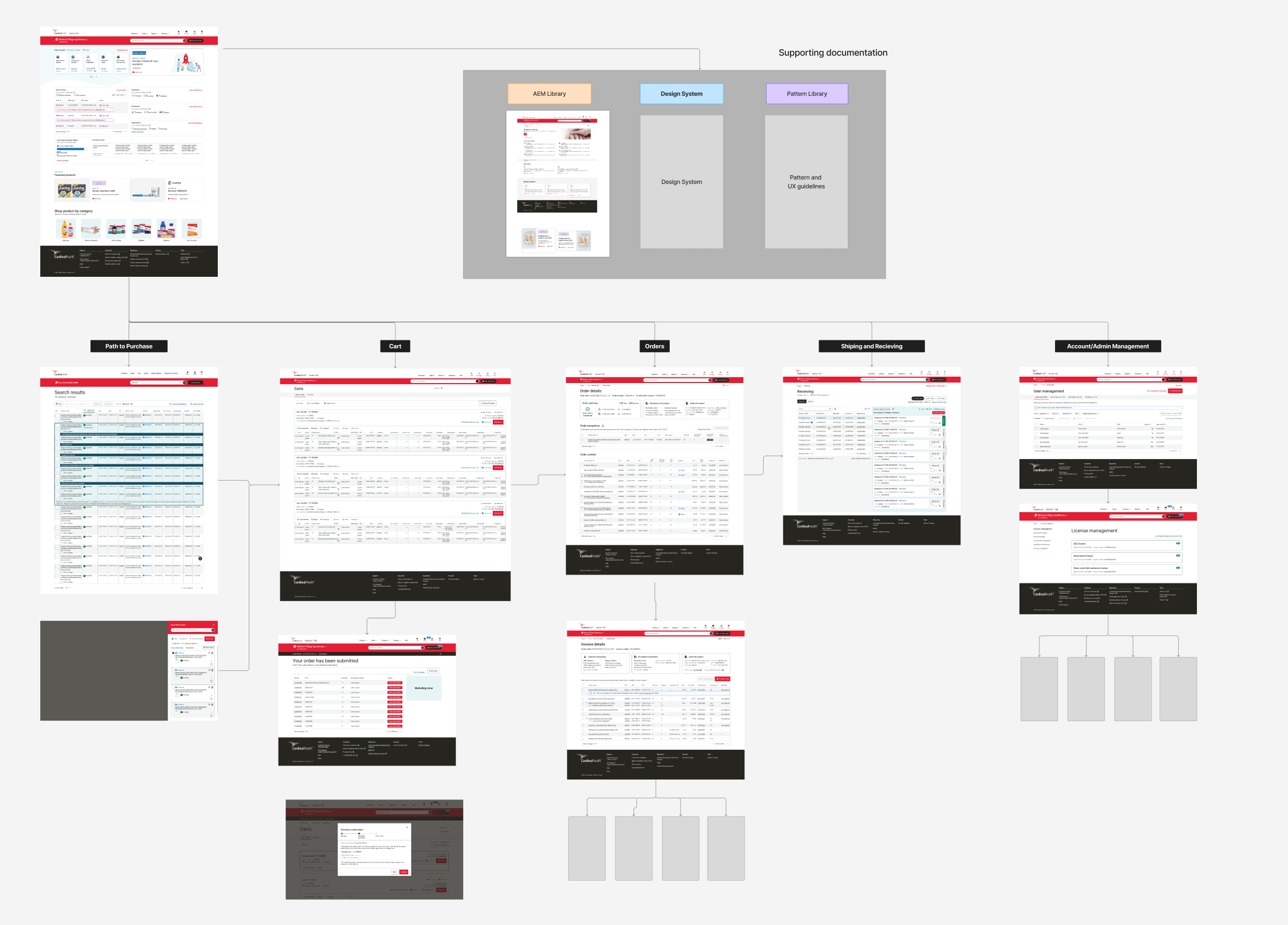
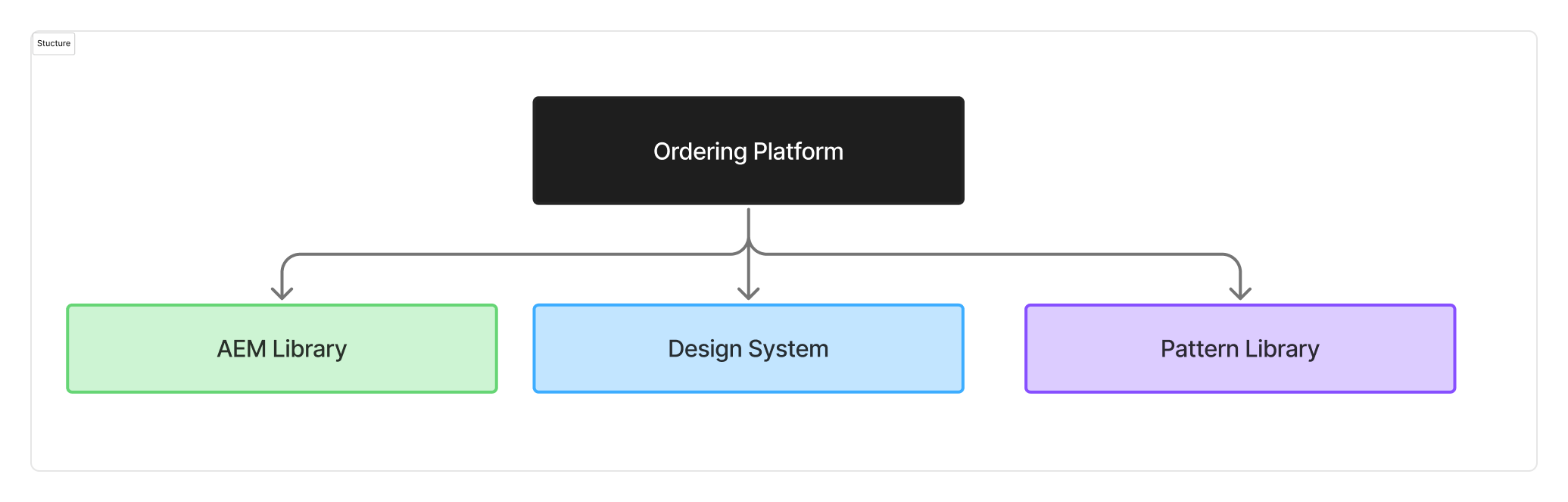
Multi-user architecture
Critical information was buried in marketing content. Users couldn't trust the platform, so they slowed down to verify—adding friction to workflows that affect patient care.
AEM Library
Successful modernization of the marketing resources to become more operational and scalable.
Design System & Pattern Library
Accelerated the velocity of the design system that resulted in a scalable enterprise ready design system.
Mobile App Redesign
Redesign app and delivery process in 6 months time.